Risks and opportunities of cultural heritage management in Victoria – top tips for developers
Author: Sotiria McDonald, Experienced Heritage Consultant
February 18, 2026
News & Insights
Victoria is in the thick of a development boom, driven mainly by population growth and an acute housing shortage. As developers respond to the demand, managing cultural heritage can be a project risk – but it can also be an opportunity.
Sotiria McDonald, Experienced Heritage Consultant, shares some tips for developers navigating Cultural Heritage Management Plans (CHMPs) and engaging with Registered Aboriginal Parties (RAPs) in Victoria.
Victoria’s development boom
The Victorian Government plans to build 800,000 new homes by 2034; and there is also significant work underway to grow the supply of renewable energy and storage in order to reach the state’s legislated 2030 targets.
However, while these commitments may give proponents confidence in moving projects forward, there are other crucial factors underlying project success. Regulatory requirements around cultural heritage management have a major impact on project outcomes – and they require effective navigation to reduce timeline and financial risks.
Common challenges
Here at Niche, we are seeing a growing number of developers in Victoria seeking help with heritage requirements. Often this comes after underestimating the cost and time involved in scoping and delivering a CHMP, so the pressure is really on.
A common cause for delays or cost blowouts in the CHMP process is the misunderstanding of the requirements of the project area’s RAP, who is responsible for protecting and managing their heritage and ultimately approving CHMPs.
For example, there may be confusion around the scale and complexity of archaeological excavations required at a site, which is critical for determining the timeline for CHMP and, therefore, the overall project.
This is a growing risk for developers, with many areas earmarked for development across Victoria bearing cultural significance to RAPs.
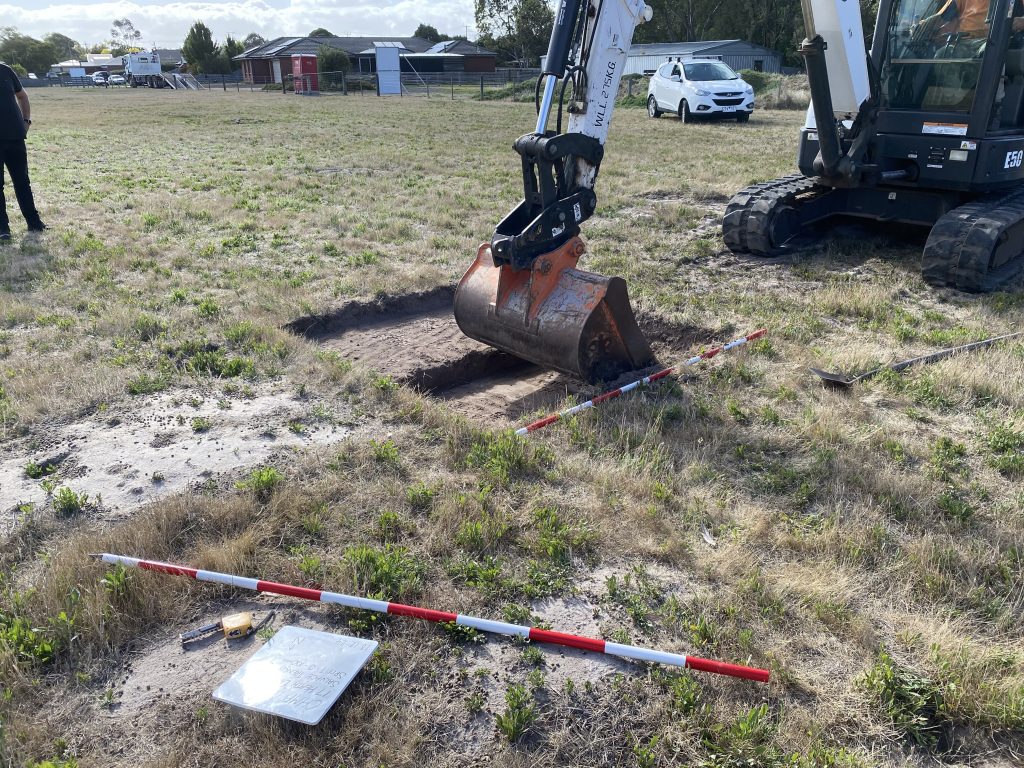
Archaeological excavations taking place on a property development project site in Victoria
Also, under the Plan for Victoria, there is a significant focus on recognising and celebrating Country in the built environment. Action 16 of the plan indicates that developers will be required to embed Traditional Owner knowledge in built environment projects.
While the implications of this are not yet clear, it further sets the scene for proactive and meaningful RAP engagement being critical for developers.
Steps forward
As experienced practitioners in this space, here are our top tips for navigating cultural heritage requirements, to ensure projects run on time, within budget, and with optimal outcomes for all parties.
Tip 1 – start early
This may seem simple, but it is so often overlooked. Engaging an experienced heritage practitioner at the start of your project during the concept phase will help you understand the scope, time and costs specific to the requirements of the RAP area.
With this approach, you can accurately build your timeline and won’t be stung by unexpected excavations or the worst-case scenario of having to redesign your project footprint.
Tip 2 – understand the latest RAP requirements
Even if a detailed CHMP process was on your radar from the outset, you may not be aware that new requirements were recently introduced by many RAPs. Engaging a practitioner with strong RAP relationships can help you plan more effectively and navigate the discussions and processes with RAPs more smoothly.
Read our recent article here to understand more about RAP requirements and how they are changing.
Tip 3 – embrace the opportunity
Not properly considering cultural heritage is clearly a project delivery risk, but it leads to missed opportunities too. For example, early stakeholder engagement could identify the need to redesign or relocate a project while it’s still cost-effective to do so, or working with the RAP group to preserve and celebrate artefacts or stories can be turned into a feature of the project.
Taking the opportunity to work with rather than around RAPs can ensure projects are well-received by buyers, investors and the local community, differentiating and protecting their value into the future and leading to better social outcomes.
How can we help?
Here at Niche, we have a strong track record in helping developers deliver and secure approval for CHMPs. Through our network of RAPs and local groups across the state, we understand complexities, costs and timings, and how these will impact your project.
In turn, we can provide accurate and clear guidance up front to set your project up for success.
Get in touch with us today for more information.
Find out more
Follow us
Excellence in your environment
About the author
-
Sotiria McDonald BA (Hons), DipPhotogrphy&PhotoImag
Experienced Consultant – Heritage

-
Dr Justin Shiner BA (Hons), PhD (Archaeology)
Manager – Heritage